


urinary tract infections (UTIs)
a non-antibiotic therapy

Do you suffer from  UTIs?
UTIs?


UTIs are a common, often painful and uncomfortable, condition that can happen to anyone – particularly women – at some point in their life.
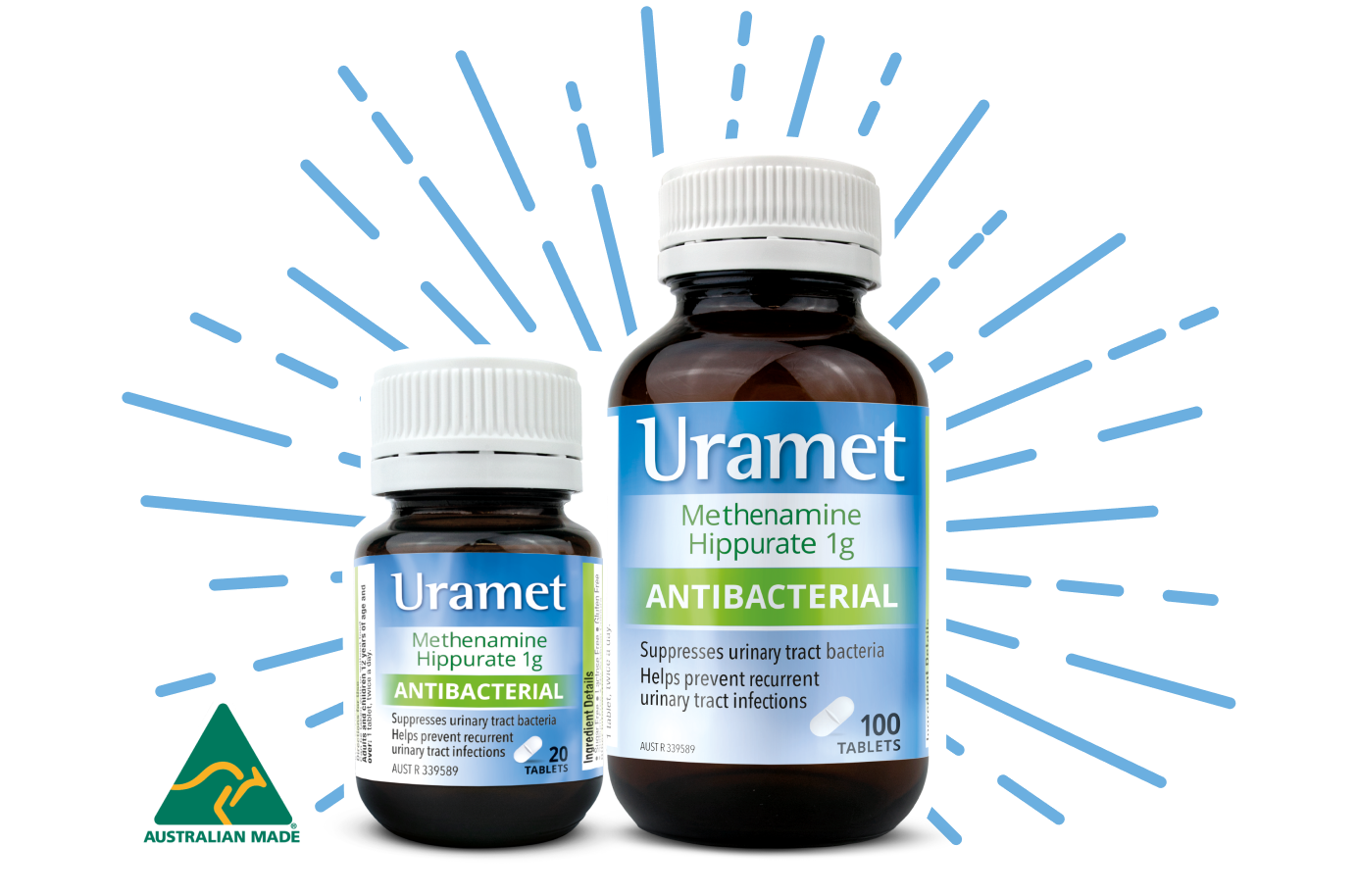
But for some, UTIs can be a recurring frustration they have to deal with. Uramet is a non-antibiotic therapy that helps prevent recurrent UTIs. It is not used to treat an active Urinary Tract Infection. Uramet is an antibacterial – the active ingredient, methenamine hippurate, works by suppressing bacteria in the urine, thereby helping to prevent recurrent UTIs before they can take hold.
You have recurrent urinary tract
infections if you have:
Two or more UTIs diagnosed by your doctor in the past
6 months OR three or more UTIs in a 12 month period.
You’re not alone…
UTIs are common, particularly with increasing age.
Women are more likely to get a UTI than men.

Nearly 1 in 3 women develop a UTI requiring treatment by the age of 24 years. About 1 in 4 women with an initial UTI have a recurrence within 6 months.



URAMET is an antibacterial tablet that suppresses bacteria in the urine that can cause UTIs:
- Therapy to help prevent recurrent UTIs
- Works by targeting the bacteria in the urine that cause UTIs
- May be used for short or long-term UTI prevention
- It can be taken every day to help prevent recurrent UTIs
- Can be used after successful initial antibiotic
treatment of UTIs – to help stay infection free - Available in 2 bottle sizes; 20 tablets and 100 tablets*
*Uramet 100 tablets is listed on the Pharmaceutical Benefits Scheme (PBS)



Want to find out more about URAMET and UTIs?

Need more information about what causes recurrent UTIs?

Got questions about URAMET and managing UTIs?

Require more product information?

 to find URAMET
 to find URAMET